Leaderboard




Popular Content
Showing content with the highest reputation on 05/24/14 in all areas
-
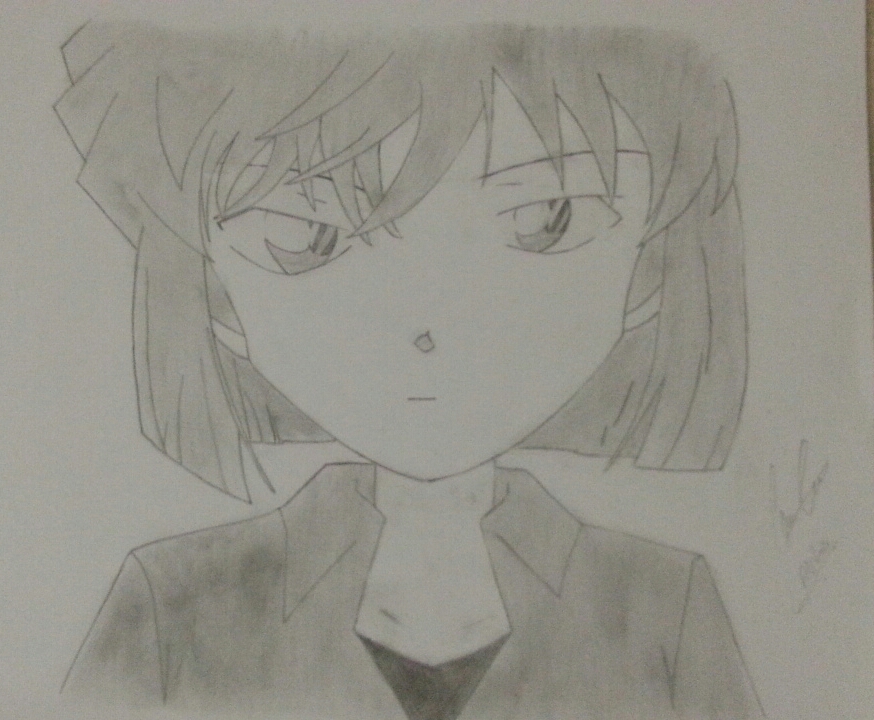
A drawing of Conan that I made... I hope it isn't too bad. Enjoy! -A. Haibara
 3 points
 -
In this thread me and my sister (SHAHOODA)are going to post our drawings My name is Aisha and my sisters name is Shahd First Im going to post Haibara Ai pic My sister will post hers in a comment Hope you like it and if you find any mistakes in the drawings please do tell so we can improve it next time Thank you
 1 point
 -
Waiting for the author to reveal who the Boss of BO is...1 point
-
Kamusta or Kumusta is actually "How are you?" but it is used as a form of greeting.And as for Hi or Hello,as far as I know,there is no actual word for that. Paalam for good-bye. I will post the other translations and some useful phrases tomorrow. Have a good day! Lesson 1: The Filipino Alphabet Alpabetong Pilipino The Philippine Alphabet has 28 letters.If you notice it is similar to the English Alphabet aside form the letters Ññ and Ngng. Ññ is adopted from the Spanish alphabet while the Ngng came from the original or the Pre-Hispanic Filipino Alphabet. The Vowels: Compared to English Vowels,the Filipino Vowels consist of only one sound. Pronounce-------as in English--------Example a-------------------------father------------- Magandang umaga,good morning e-------------------------egg-----------------Nene i-------------------------each---------------ibig,want o-------------------------long---------------totoo, true u-------------------------food-------------- kukunin, will take Note:The languages of the pre-Hispanic Filipinos only had three vowels: "a," "e/i" and "o/u." Even today you may hear many Filipinos interchange "e" and "i," and "o" and 'u." The Consonants: Pronounce consonants as in English with the following considerations: 1. "g" is always hard, as in "get," never as in "gel." 2. "c, f, q, v, x" exist only in words adopted from other languages. 3. Pronounce adopted words as in their home language. 4. All other consonants are pronounced as in English. 5. In addition, there is the "ng" consonant; in the Filipino alphabet, it comes after "ñ" 6.More on the Pronunciation of "ng" shortly Note:The languages of the pre-Hispanic Filipinos did not have the consonants "c," "f," "j," "q," "v," "x" and "z." Even today you may hear many Filipinos pronounce "v" as "b" and "f" as "p." The Consonant "Ng" To produce the "nga" sound, do the following. a. Say "hanger" b. Say "hang a." c. Say "ang a." d. Say "ng a." e. Say "nga." Practice "nga" with the following words: · ang · mga (short for "manga," the plural marker for nouns and pronouns) · nang · ng (pronounced like "nang," but is a different word) · mangarap, to dream · sanga, branch · ngayón, now · kailangan, need So? That ends our Lesson for today. If you have any questions or concerns ask me. For Tagalog-English Dictionary click here. Lesson 2 Preview: Useful Phrases No homework for today! Hurray! What's inside the spoilerbox??? References: www.omniglot.com www.tagalog1.com1 point