Leaderboard


Popular Content
Showing content with the highest reputation on 03/07/11 in all areas
-
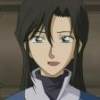
1 pointIs it bad that as soon as I saw this character I immediately thought that it was someone else in disguise? Anyway, I don't think it'll be any of the the ones in the spoiler box 'cause... So I suppose it's possible it is in fact a brand new character who happens to be interested in Conan. Well, as long as the plot around him isn't too close to what happened with Eisuke I suppose it could be okay. I'm interested in what 'kind' of rival he'll be though... :mrgreen: Oh, and here's a link to the chinese file if anyone's interested: http://tieba.baidu.com/f?kz=1019607500
-
1 pointLol! Glad you know now . And what do you mean I ran away from ramen? I ran away because Nami wanted to kill me . Ah, and if you don't mind, Conan's girlfriend ()... can you remove my quote from your post? I did some mistake in the lesson ... Even though I edit my post of mistakes, my post in your post will remain the same . And it's taking quite a space D: Ah, I am not sure I did a good one just now... the story was kinda lame . Anyway, glad you like it! (Get to work, Tna ! We are waiting !) Thank you! Oww, welcome to Japanese Classroom, Kirite ! There's more to it like Cheesus said, so don't be shy to visit often ! I was planning to create a thread like this (or post the lessons) there in DCTP, but I saw there was a thread for 'Ask anything about Japanese here'... so... since there was already a thread about it ... Like Conan's girlfriend said , It's 成程【なるほど/naruhodo】- 'I see', it can also be translated to -> That's right!; indeed. Conan often says them (it is said a lot anyway), or more often (when he hit the bullseye), this one -> そうか, そ 言う 事 か!/sou ka, so iu koto ka! (I see, so that's how it is!) Example: Tna: カオコ! きのうは, チイススは ヤクザに 殺された/Kaoko! Kinou wa, Cheesus wa yakuza ni korosareta! (Kaoko! Yesterday, Cheesus was killed by the yakuza!) Kaoko: なるほど/naruhodo (I see). You can also use; そう です か/sou desu ka (polite) そう か/sou ka (plain) わかりました/wakarimashita (polite) わかった/wakatta (plain) "sou desu ka" is similar to "naruhodo", but this is used when you received an answer of your question and to show it to the listener. If you were silence even when the listener answered you, he/she may confirm if you heard of that or not. Maurice (at a convenience store, after looking for ice cream): すみません, アイスクリイヌが 見つからないん です けど.../sumimasen, aisukuriimu ga mitsukaranai n desu kedo... (Excuse me, I can't find ice cream...) Parkur: ぜんぶ 売り切れました よ./zenbu urikiremashita yo. (All of ice cream were sold out.) Maurice: え, ぜんぶ?/e, zenbu? (What, all?) Parkur: はい, 今日は 暑い です から/hai, kyou wa atsui desu kara. (Yes, because it's hot today.) Maurice: そう です か, 判りました./sou desu ka, wakarimashita. (I see, it's okay.) As you can see in above, "wakarimashita" is often used together with "naruhodo" and "sou desu ka". The literal meaning is "I understood", and when it's with "naruhodo", it indicates that you understood the meaning of something or got information that you were looking for. So, you may say "naruhodo" because you got the reason why all of ice cream were sold out. But when you were quite disappointed, perhaps you will not get interested in the reason. Hope this all helps!
-
1 pointHiragana: Lesson 21 - 'な' [na] Kaoko: Hello once again, everyone! I hope you are all are in the best of healths and are in high spirits for today’s lesson. Uh... we have a guest fr today’s lesson... well, you know... she is quite, ehem... famous... her head... is, wanted... for over... 16,000,000... umm... Nami: ...I didn’t come here to be targetted... where’s the money? Kaoko: Ehh! But we haven’t started yet! And you didn’t even do anything! Nami: Sheesh... so, what would you like me to do *rude tone*? Kaoko: It was a mistake I chose you for today's lesson... Nami: Seriously, why did you call a pirate over to be a help guy to some ridiculous lesson? Kaoko: Meanie! You can go home now for all I care. I won’t give you anything because you didn’t help . Nami: Eeehhh! After all the way. ごめん, ごめん! ほんとうに ごめなさい (sorry, sorry! I am really sorry)! What would you like me to do, Kaoko-oneesama~ Kaoko: Huh (変わった)? Ah, well... you see, we are having hiragana ‘な’. And want a bried explanation. Nami: (I didn’t know that it was just this) Very well, な, in hiragana, or ナ in katakana, is one of the Japanese kana, which each represent one mora. The hiragana is made in four strokes, while the katakana in two. Both represent [na]. な and ナ originate from 奈. Kaoko: Next is, what’s the first thing that comes to your mind when I tell you to have a word beginning with the character ‘な’. Nami: Well of course, that would be my name, ‘Nami’. My name refers to the meaning of wave 波/なみ (nami). Kaoko: Heehh.. Your name suits you to be in the sea. Nami: Having said so, I have another word. Kaoko: What is it? Nami: 涙/なみだ, meaning ‘tear’. I use to cry a lot when I was a kid... Kaoko: Thanks for your company today. That’s enough talking for today... now, let us move on! Nami: Well, I’ll have to be going then. Where’s the reward? Kaoko: You will have to wait till the end of the lesson. Nami: ... Pronunciation: 'な' is romanized 'na' and pronounced ‘na’ as in ‘nap’. Words with 'な': 'な' at the beginning: 仲間/なかま (nakama -> companion; fellow; comrade; mate; partner) 長い/ながい (nagai -> long; lenghty) 波/なみ (nami -> wave) 何/なに (nani -> interrogative pronoun; what) なぜ (naze -> interrogative pronoun; why) 泣く/なく (naku -> crying) 涙/なみだ (namida -> tears) 名前/なまえ(namae -> name) 'な' in the middle: 花火/はなび (hanabi -> fireworks) あなた (anata -> you; formal speech for addressing someone, but common speech for women) 話す/はなす (hanasu -> talking; speaking) 悲しみ/かなしみ (kanashimi -> sadness; sorrow) 同じ/おなじ (onaji -> the same; identical; similar) うなぎ (unagi -> eel) ~ない (~nai) -> used for negating verb or adjective We can just simply add ~ない at the end of verb/adjective: 食べない/たべない (tabe~nai -> not eating) 読まない/よまない (yoma~nai -> not reading) 泣かない/なかない (naka~nai -> not crying) 'な' at the end: 魚/さかな (sakana -> fish) 花/はな (hana -> flower) 粉/こな (kona -> powder) 女/おんな (onna -> woman) 刀/かたな (katana - sword) 雛/ひな (hina -> chick; young bird) ‘な’ also used as a suffix at the end of interrogative sentence: かな?(ka na?) -> “I wonder...” ('Ka na' implies having mostly made up one's mind) Example: Stroke order: Task: You shall write 'な' 50 - 100 times in your textbook. Memorize the shape, the stroke order, the sound, the pronunciation (echo the sound of the character each time you write it down), etc. *behind the scene* Nami: You finished, I was holding my patient the whole time. So if you don’t mind... Kaoko: Well of course, here! 鳴門/なると (naruto) Nami: What’s this?! Kaoko: Because of today’s lesson ‘な’, your reward will also have to be something that begins with ‘な’. Ah, and I also made this for you~ ;-) *Smokes coming out from Nami’s body, flames were showing on her eyes, her stick she was holding was beginning to melt from the heat* Kaoko: Na-Nami-san...? Nami: That’s it! You are gonna pay, you cheeky bitch! Kaoko: Eh, wha- what? What's wrong? Nami-san? *runs away in fear* Nami: まって (wait)! くそおんな (you damn woman)! Meanwhile... Mmmm~ this is delicious... Credits: Thanks to Tna-chan who helped with me with the examples~ テナは 大丈夫かなあ/Tena wa daijoubu ka naa (I wonder if Tena is alright.) ケンニは がんばってくれかなあ/Kenny wa ganbatte kure ka naa. (I wonder if Kenny is doing his best.) ケンニは どこかなあ/Kenny wa doko ka naa. (I wonder where's Kenny)
-
1 pointHaha, thanks ! Just to inform you guys that the forum I made is for us to create and discuss projects for our Japanese learning community . As sharing pictures for our certain lessons, ideas and suggestions for the blog and the courses , etc. In addition of that, I permit members to create forums in the off topic boards, like Gin requested for the Naruto forum there . But remember, our main home is here in DCW ! Of course you can ! Welcome to Japanese Classroom of DCW ! Sorry, haha... I will post the lesson shortly hopefully. I am having Tna to help me with the lessons, like finding the examples and stuff (because I'm quite busy these days, too. Having Tna to help me, we will post the lessons more quickly ). And just to tell you guys that she is doing a great job ! Glad to have you back, Kenny! No, you are always needed, 私達は あなたが 大好き なんです から! I have quite few things I wanna ask... but since you said you were busy ... I really didn't want to disturb you . I hope you for the best luck in the upcoming exam ! Gambatte ne, Kenny !
-
1 point
-
1 pointNot everyone has time to come on DCW ALL THE TIME. Real life takes on a higher priority than a virtual one. Besides, there are definitely people who will come back after years/months being inactive due to various reasons. They might have lost interest in DC at times, but rekindle their love for DC and come back here again and maybe contribute something. Also, making an introduction is up to the person, why bother to make such a rule to "force" everyone here to make one? If s/he doesn't want to make one, so be it. You don't really need an introduction to know a person. I think people in DCW shouldn't worry about taking breaks and worry about whether or not his/her own account will get deleted. (I actually think it will get annoying awhile if you keep thinking whether or not your account in DCW is still here :wink:)